
What are common HELOC requirements?
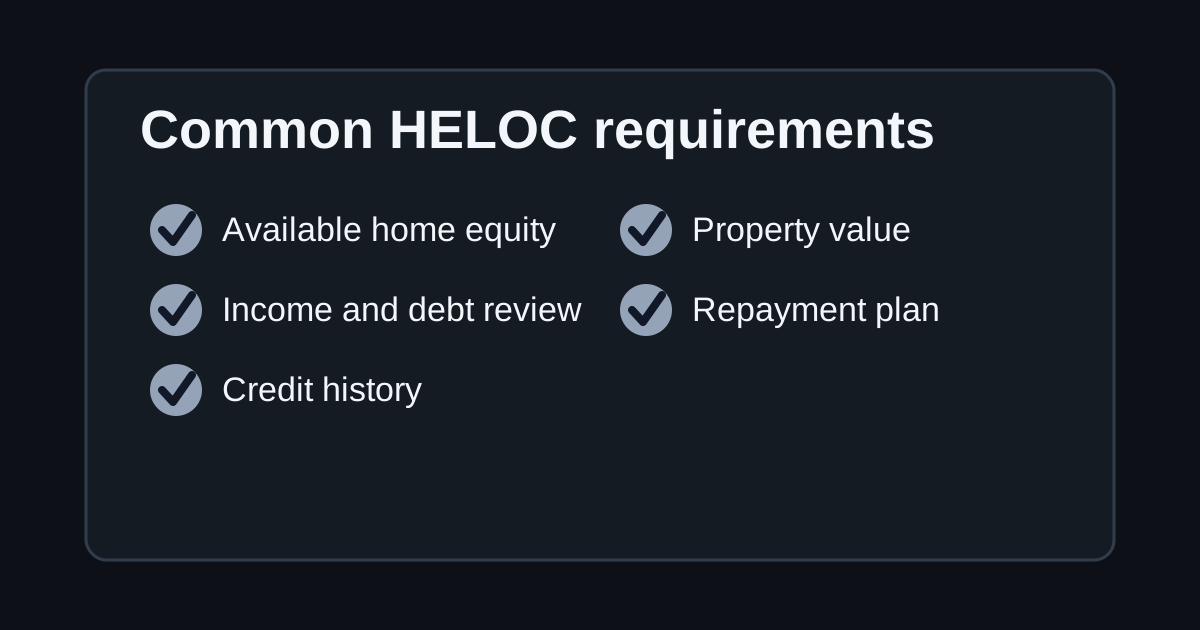
HELOC requirements vary by lender, but most reviews focus on equity, property value, income, debt obligations, credit history, and repayment capacity. The core question is whether the homeowner has enough available equity and can reasonably handle the payment obligation.
Because a HELOC is secured by the home, qualification is not only about credit access. It is also about whether the loan makes sense against the home's value and the borrower's budget.
How do lenders think about equity?
Home equity is the difference between estimated home value and mortgage debt. A lender may use an appraisal, automated valuation, or other property-value process to estimate that value.
The FTC notes that the amount a homeowner can borrow and the interest rate may depend on factors such as income, credit history, and market value. That means a high home value alone does not guarantee approval.
What documents might be needed?
Common application inputs can include:
- Name and contact details
- Property address
- Mortgage and lien information
- Income information
- Employment or business details
- Permission to review credit
- Consent and disclosures
Ratespedia's first step is intentionally lighter: basic contact information, consent, attribution, and address verification before continuing into the application.
What can slow down a HELOC application?
Common slowdowns include incomplete property details, mismatched address information, unresolved liens, insufficient equity, income documentation gaps, and uncertainty about repayment terms.
Homeowners can prepare by checking the property address, reviewing current mortgage balance, estimating desired credit need, and comparing total costs.
What should I ask before applying?
Ask these questions before moving forward:
- How is the property value determined?
- Is the APR variable?
- What fees apply at opening and during use?
- How long is the draw period?
- What happens when repayment begins?
- Could payment rise if benchmark rates move?