Compare a HELOC with a home equity loan, including credit-line flexibility, lump-sum borrowing, variable APRs, fixed APRs, and repayment tradeoffs.
Ratespedia Editorial TeamPublished August 19, 2026Updated August 19, 20265 min read
Direct Answer
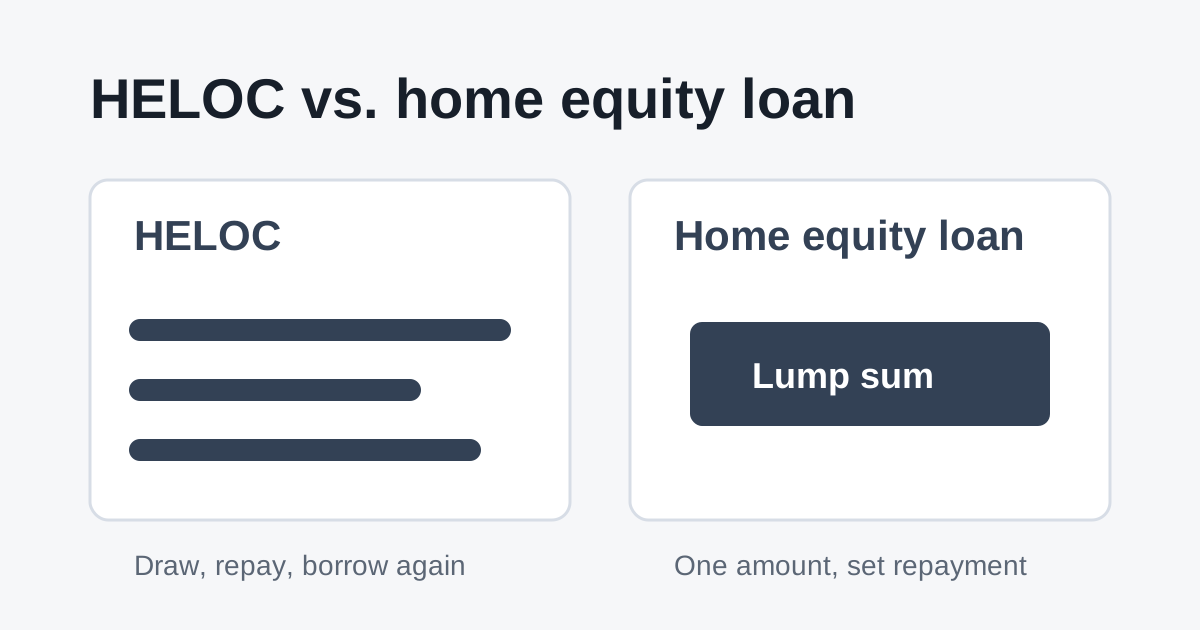
A HELOC is revolving credit secured by home equity, while a home equity loan is usually a lump-sum second mortgage with fixed payments. Both use the home as collateral.
Is a HELOC the same as a home equity loan?
No. A HELOC is a revolving line of credit secured by home equity. A home equity loan is typically a lump-sum second mortgage secured by the home. Both use home equity, but the borrowing structure is different.
The CFPB explains that a HELOC works like a line of credit, while a home equity loan is a specific amount borrowed against the home's equity.
What is the practical difference?
The practical difference is access and repayment shape:
Funds: A HELOC lets you draw as needed, up to a limit. A home equity loan usually provides a lump sum upfront.
Rate pattern: HELOCs commonly use variable APRs. Home equity loans commonly use fixed APRs.
Payment: HELOC payments can change by balance and rate. Home equity loan payments are often more predictable.
Use case: A HELOC may fit staged or uncertain costs. A home equity loan may fit one known expense.
Neither option is automatically better. The right comparison starts with how much money is needed, when it is needed, and how stable the repayment plan must be.
Which option can fit ongoing expenses?
A HELOC can fit costs that arrive over time because the borrower can draw against the line as needed. That can be useful for projects with phases, but it also makes overspending easier if the borrower treats the line like extra income.
Which option can fit a single known expense?
A home equity loan may fit a one-time project or expense when the total amount is known and the borrower wants a more predictable payment pattern. Fixed APRs are common for home equity loans, but fees and terms still vary.
What risk do both products share?
Both products can put the home at risk if payments are not made. The FTC notes that home equity loans and HELOCs use the home as collateral. A lower rate than unsecured debt does not remove the secured-debt risk.
HELOC FAQ
Is a HELOC the same as a home equity loan?
No. A HELOC is a revolving line of credit. A home equity loan is generally one lump-sum loan.
Which option has a fixed payment?
Home equity loans commonly have fixed APRs and fixed payments. HELOCs commonly have variable APRs.
Which is better for ongoing expenses?
A HELOC may fit expenses that happen over time because you can draw as needed, subject to the credit agreement.
About the author
Ratespedia Editorial Team, Consumer finance education. Ratespedia publishes consumer finance education designed to help homeowners compare options and understand the application path before sharing personal information.
References
Consumer Financial Protection Bureau. (2025, January 7). What is the difference between a home equity loan and a home equity line of credit (HELOC)? https://www.consumerfinance.gov/ask-cfpb/what-is-the-difference-between-a-home-equity-loan-and-a-home-equity-line-of-credit-heloc-en-247/ Source
Federal Trade Commission. (2021). Home equity loans and home equity lines of credit. https://consumer.ftc.gov/articles/home-equity-loans-and-home-equity-lines-credit Source
Consumer Financial Protection Bureau. (2022). Home equity lines of credit. https://files.consumerfinance.gov/f/documents/cfpb_heloc-brochure.pdf Source